 HOOD
HOOD
Robinhood Chain · 5,555 fennecs · 256×256 pixel art
Build your fennec
No mockups, no renders — these are the collection's real layers, stacked in the collection's layer order.
Fennec
built from real collection layers
Collection5,555 fennecs · 33 one-of-ones
Mint0.0012 ETH · 3 per wallet total
Vault rate10,000 FOX · you get 9,450
Statusearlier build ran on testnet
What this is
5,555 desert fennecs
Pixel foxes at 256×256 on Robinhood Chain. Not a retro gag — the pixel is the medium here, and every fox is dressed in layers: body material, a full costume or an outfit, headwear, eyes, accessories — piece over piece, the way a real atelier works.
 material: classic fur · 256×256
 material: gold · 256×256
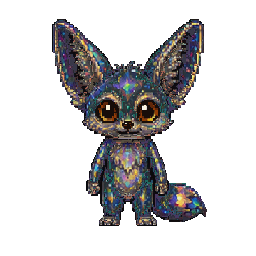 material: black opal · 256×256
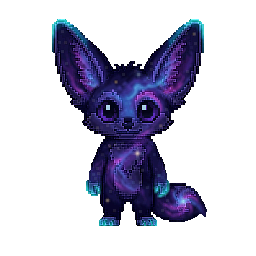 material: universe · 256×256
 material: kintsugi porcelain · 256×256
 material: molten magma · 256×256
← browse the wall →
5,555
fennecs total, 5,000 of them in the public sale
0.0012 ETH
mint price — the proceeds go to the project treasury once the sale is finalised and revealed; if fewer than 33 paid foxes sell, anyone can cancel the sale, and then each buyer claims their own payment back
33
unique 1/1s — standalone artworks, collector pieces
555
reserve held in a Community Vault; its address is published before the mint
7.5%
secondary royalty — split 50/25/25, half of it to the project
MAX 3
NFTs per wallet across every paid stage combined — early mints count against it
Five access stages — one shared mint contract
1
Team555 NFTs into the Community Vault
address published2
Inner circle100,000+ FENNEC (wallet + InSwap, an LP position counts its FENNEC side twice) — up to 2; Fennec Box or giveaway win — 1
limits don't stack3
Top Robinhood collectionshold an allowlisted collection, checked onchain
1 mint total4
FCFS queueregistered wallets only, opened in timed batches
1 per wallet5
Open publicno conditions — but whatever you minted earlier counts
up to the 3 totalOne cap covers them all: a wallet can mint 3 NFTs in total across stages 2 to 5, not 3 in each. Take 2 in the inner circle and the public stage will let you take exactly 1 more. Honest counter: the 555 reserve mints first, yet the public-sale counter still starts at 0 / 5,000 — the reserve is never sold as public mint. Rarity shapes how a fox looks and what the market pays for it — nothing else.
After the mint
The market factory
Most collections end at the mint. For HoodFox, that is where life begins: NFTs, the FOX token and ETH are wired into one simple system, so the collection has a life — not just a mint day.
NFT⇄
FOX⇄
ETH
The vault — a shared pool of foxes
Drop your fox into the vault: it is priced at 10,000 FOX, and after the 5% creator fee and the 0.5% protocol fee you receive 9,450 FOX. Going back costs 10,550 FOX for whichever fox the vault hands over next, or 11,050 FOX to name the number you want. The 10,000 rate is fixed at deployment; the fees are capped and timelocked.
A supply you can reason about
The deployed FOX token mints one fixed bucket of 55,550,000, released only at 10,000 per deposited fox. The approved launch plan raises the total to 60,000,000 by adding two more fixed buckets — 1,650,000 activation subsidy and 2,800,000 hunt bounties; those are not in the deployed contracts yet. The vault rate is a mechanical reference — not a price guarantee.
Exit with no lockup
In normal mode you can leave any time: NFT → FOX → ETH, or walk the path back. Buying a fox with ETH takes one transaction. The actual price depends on the market.
Fees that make sense
Not a flat $2 per trade like Anvil's rigid preset — a percentage that follows the size of the operation. Small trades pay little; big ones pay proportionally.
Fig. 1 — the vault: a two-way swaprate 10,000 · you get 9,450 · you pay 10,550
Fig. 2 — three swaps: NFT ⇄ FOX ⇄ ETHthe intended flow
Rewards · you pick the tier
Activation, tier by tier
Activation gives your fox a weight in the reward pool. Three things fill that pool: the royalty flywheel — the quarter of secondary royalties set aside for holders — and, under the approved plan, 25% of every activation payment plus a 1,650,000 FOX subsidy that carries the pool until activations can sustain it on their own. More than one funder can be approved to pay into it. What does not fill it: the vault's trading fees, which go to the creator and protocol treasuries. The tier is bought, not inherited: you choose how much weight your fox carries in the distribution.
Fig. 3 — the ladder of activation tierspaid in FOX · weight grows with the tier
| Tier | Price, FOX | Weight | What it means |
|---|---|---|---|
| I | 750 | 10,000 | The entry point — the cheapest way to plug your fox in and start collecting its share. |
| II | 1,500 | 12,500 | A modest step up in weight over the entry tier. |
| III | 3,000 | 16,000 | The middle of the ladder — a noticeably heavier share of the split. |
| IV | 5,000 | 20,000 | A serious commitment with weight to match. |
| V | 9,000 | 33,300 | The top of the ladder — the heaviest weight a single fox can carry. |
Upgrade rule
Climb by paying only the difference
Moving a fox from a lower tier to a higher one costs the difference between the two tier prices — never the full price again. What you have already paid keeps counting.
Where the payment goes — planned split
Each activation payment will split three ways
70% burned
25% rewards
5% treasury
The contract deployed to testnet still runs the earlier split — 95% burned, 5% treasury. The 70/25/5 above is the approved launch configuration.
Said plainly
Rewards don't appear out of thin air
Only what is actually paid in gets distributed: royalties that actually arrive, activations that are actually bought, and a subsidy of a fixed size that will run out. Less activity means less to split. This is not a promise of income and not a guarantee of any result.
FOX tokenomics — approved, not yet deployed
60,000,000 FOX planned
55,550,000 — the vault's share · 1,650,000 — activation subsidy · 2,800,000 — full-set bounties. The live token holds the 55,550,000 bucket only; the other two ship with the launch configuration.
What the project earns on
The full list, nothing left out
Every stream we have, one line each, with how far it has actually got. Nothing is live on mainnet and none of it has earned a real coin — "run on testnet" means the code path executed in one of the two runs described further down.
- run on testnetPaid-mint money goes to the project treasury — but only if the sale completes Run two, 27 Aug — the withdrawal moved the exact amount and left the mint contract at zero. It is not unconditional: the treasury can only take it after the sale is finalised and revealed, and if fewer than 33 paid foxes are sold by the deadline anyone can cancel the sale, after which each buyer claims their own payment back and the treasury cannot touch it. Withdrawal tx 0xc4913f…932ba5
- run on testnetVault creator fee — 5% of every deposit Run one, 26 Aug — the creator seed put nine foxes into the vault with this fee configured, and the vault deducts it on every deposit. The production seed is 555 foxes: a different configuration, and it has not been run on testnet. Seed deposit tx 0x07834e…c9d05a
- run on testnetVault protocol fee — 0.5% of every deposit Same deposit, same transaction. The same 0.5% is charged on both ways out of the vault as well — those are the two lines below. Same tx 0x07834e…c9d05a
- in code, local testsTaking the next fox out — 5% creator fee and 0.5% protocol fee That is what turns the 10,000 rate into the 10,550 you pay. This path was not called in either testnet run; the vault test suite covers it
- run on testnetNaming the number you want — 10% creator fee and 0.5% protocol fee That is what turns 10,000 into 11,050. Run one, 26 Aug — a real purchase of foxes #8 and #9 through the router, which reaches the vault's specific-buy path. Purchase tx 0xe846d1…28ddfc
- run on testnetProtocol share — 0.5% of every FOX/WETH swap Run one, 26 Aug — four real buyback swaps, and every swap routes this fee to the treasury. First of the four 0xdf18a2…d45977
- run on testnetMarket-creator fee on every swap — 0.2% in that run, 0% at launch The same four swaps charged it: the pair works out all three fee layers at once and sends this one to the creator treasury. Two different settings, deliberately: the 26 Aug run had it at 0.2%, and the launch configuration sets it to zero. The mechanism stays in the pair — the market creator can schedule a non-zero rate, and it only takes effect after a timelock. First of the four 0xdf18a2…d45977
- run on testnetPool fee — 0.3% of every swap, kept by whoever supplies liquidity The same four swaps. The fee stays with whoever supplies the liquidity; in that run the pool had been bootstrapped from nine foxes and the LP tokens were locked for one hour. Production is a different configuration — 555 reserve foxes and a one-year lock, which is what would make this share ours in proportion — and it has not been run on testnet. First of the four 0xdf18a2…d45977
- run on testnet5% of every activation payment goes to the treasury Run one, 26 Aug — real activation and reactivation payments. That deployment still split 95/5, and the 5% treasury leg is the same one. Reactivation tx 0x2591e0…6aba2c
- in code, local testsRoulette — whatever is left once every prize owed is covered Shelved by the owner, so not part of the launch. Two things we would rather say than hide: no withdrawal of it happened on testnet, and where this leftover should end up is still an open question — burning it instead of collecting it was proposed and never approved, while the contract as written sends it to the treasury
- approved, not built5% of trait-hunt payments Today's contract charges the player nothing — it only pays out a fund deposited in advance
- approved, not builtPaid trait rolls — 60% burned, 30% to rewards, 10% to the treasury Deliberately different from the 70/25/5 used for activations and trait-hunt fees. The roll mechanic is not in the contracts
- approved, nothing soldThe factory offered to other collections, with the protocol fee on everything they run coming to us Not only their swaps: a vault built by this factory reads the protocol rate and the treasury address from the factory itself, so their deposits and buy-backs pay it too. A direction, not a deal — no collection has bought it
- run on testnetHalf of the 7.5% secondary royalty Run one, 26 Aug — the royalty split 50/25/25 onchain; the other half goes to FOX buyback-and-burn and holder rewards. Royalty split tx 0xa4b97a…d66f71
The game inside the collection
Trait hunt
A fox isn't just a picture — it's a loadout. Part of the FOX supply is reserved as bounties for hunters who complete full sets.
Fig. 4 — the trait-hunt trailset rewards pool · 2,800,000 FOX
Set hunting
Complete a set — claim the bounty
Items are scattered across the whole collection. 2,800,000 FOX of the total supply is the prize pool for completed sets. Which sets, and how they're counted — announced before mint.
Random fox
Roll a fox in the window — any time
The Random fox button up in the dressing room assembles a fox from the collection's real layers, picking every option with equal chance. A showcase game — not a reward mechanic, and not the real rarity distribution: rarity weights are not final yet.
Before the mint
See how registration will work
Preview registration
Pre-registration is its own page: pick one path, sign once, and the server works out which stage you belong to. The FCFS queue opens in timed batches built from the sign-up order. The page is a design preview for now — the wallet flow is not connected yet.
Verification status
Two testnet runs — what each one proved
Two separate deployments on Robinhood Chain Testnet, with different addresses and different contract versions. Neither of them ran the economy described on this page — the 60,000,000 supply, the extra buckets and the 70/25/5 activation split. That economy is written into the current contracts and covered by local tests; what it has never had is a run on a testnet or on mainnet.
Run one · 26 August · the earlier economy
+That deployment's contracts were verified in the explorer
+A transfer that lands back on the same address — sent directly or by an approved operator — keeps the fox activated; a transfer to any other address resets it, and the FOX and ETH already accrued stay with the token
+The 7.5% royalty split 50/25/25 onchain; buybacks burned FOX and stopped at the 24-hour cap
+Trait-hunt set payouts and roulette rounds ran end to end
Run two · 27 August · the honest reveal
+A fresh deployment of the NFT and the mint contract, at their own new addresses: 33 paid mints, then an outsider fixed the final supply at 47 and another outsider ran the reveal
+Taking the mint money out before the reveal was rejected onchain; after the reveal it went through and left the contract holding nothing
+A proof for the wrong drand round was rejected, a second reveal was rejected, and a mint after the deadline was rejected
+33 unique paid IDs were drawn outside the team's range, and the sealed URI turned into an ordinary one after the reveal. Repeat reads matched on three sample tokens, and three sample images were rendered locally — the finished art was not published in this run
Not proven — and not claimed
–The economy on this page. It is approved, not yet deployed or tested onchain
–A mainnet launch of any of this. When it happens, it will be written here
–Dates — we promise none in advance
Contract addresses go up before the mint, so every Community Vault and mint-contract movement can be followed in the explorer.